Mesa Elementary Students Celebrate Earth Day Through Eco-Learning at Tzu Chi Walnut Campus
Tzu Chi Elementary School, Walnut
|
June 29, 2026
On April 24, students from Mesa Elementary School in the West Covina School District visited the Tzu Chi Education Foundation’s Walnut Campus for a half-day learning trip that integrated ecological observation, humanities education, and environmental stewardship. Photo /Yuying Li
Written by Hungli Tsai Translated by H.B. Qin Edited by Ariel Tsai
On April 24, 2026, in celebration of Earth Day, 63 kindergarten students from Mesa Elementary School in the West Covina School District visited the Tzu Chi Education Foundation’s Walnut Campus for a half-day learning experience centered on ecological observation, humanities education, and environmental awareness.
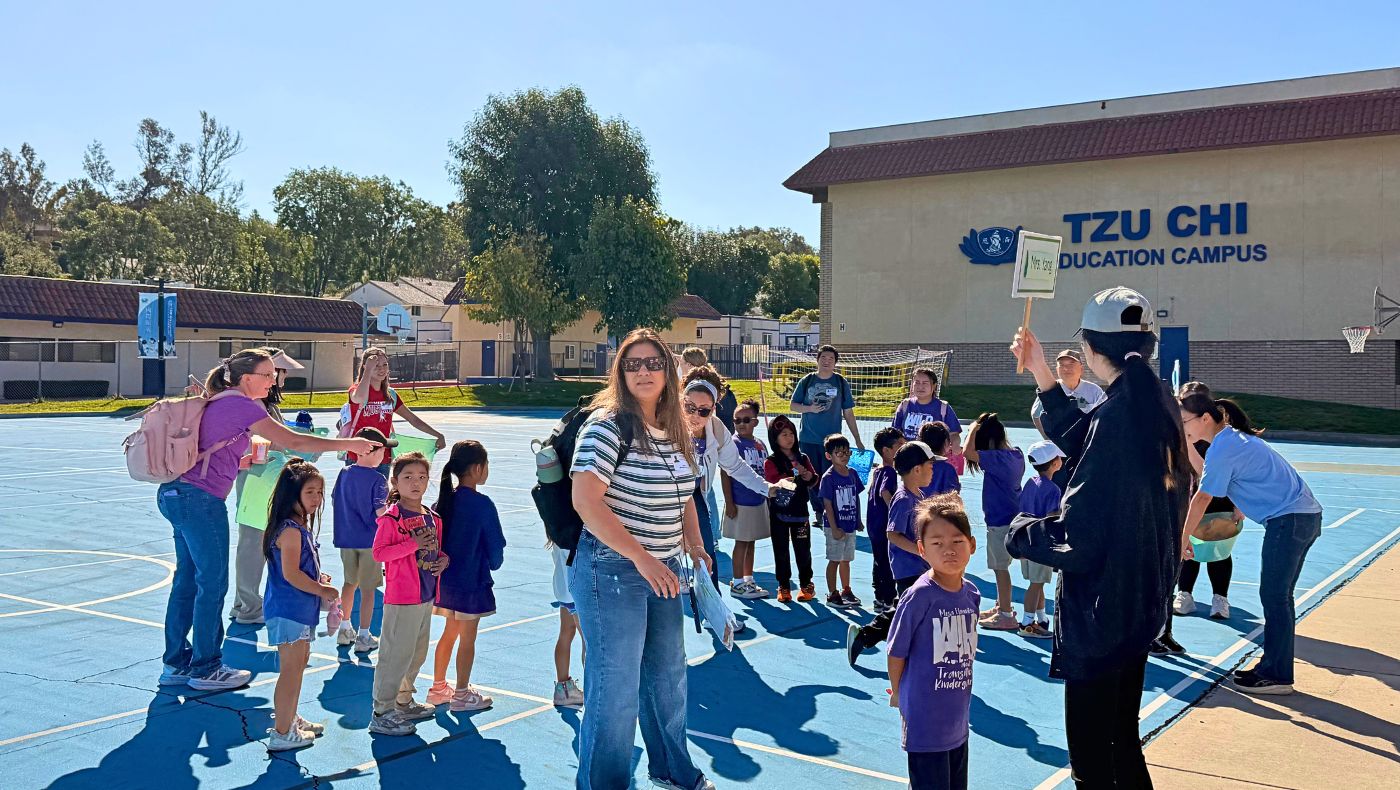
Volunteers warmly welcomed the children with songs of gratitude as teachers guided them into neat rows upon entering the campus. Photo/Yuying Li
Accompanied by teachers and parents, the children participated in a series of hands-on activities, including a welcoming ceremony, food-making experiences, farm exploration, flower-arranging classes, and life education lessons. Through laughter, discovery, and meaningful engagement, they gained a deeper understanding of the importance of cherishing life, conserving resources, and protecting the Earth.
A Warm and Engaging Learning Experience
As the school bus arrived on campus that morning, Anne Wu and Ben Du, deputy executive directors of the Education Foundation, were there to greet the students. As the bus doors opened, team leader Sandy Yang guided the children into neat lines while volunteers welcomed them with songs, applause, and smiles.
From the very beginning, the outing felt like more than a simple field trip. It became a learning journey embraced with warmth, care, and community spirit.
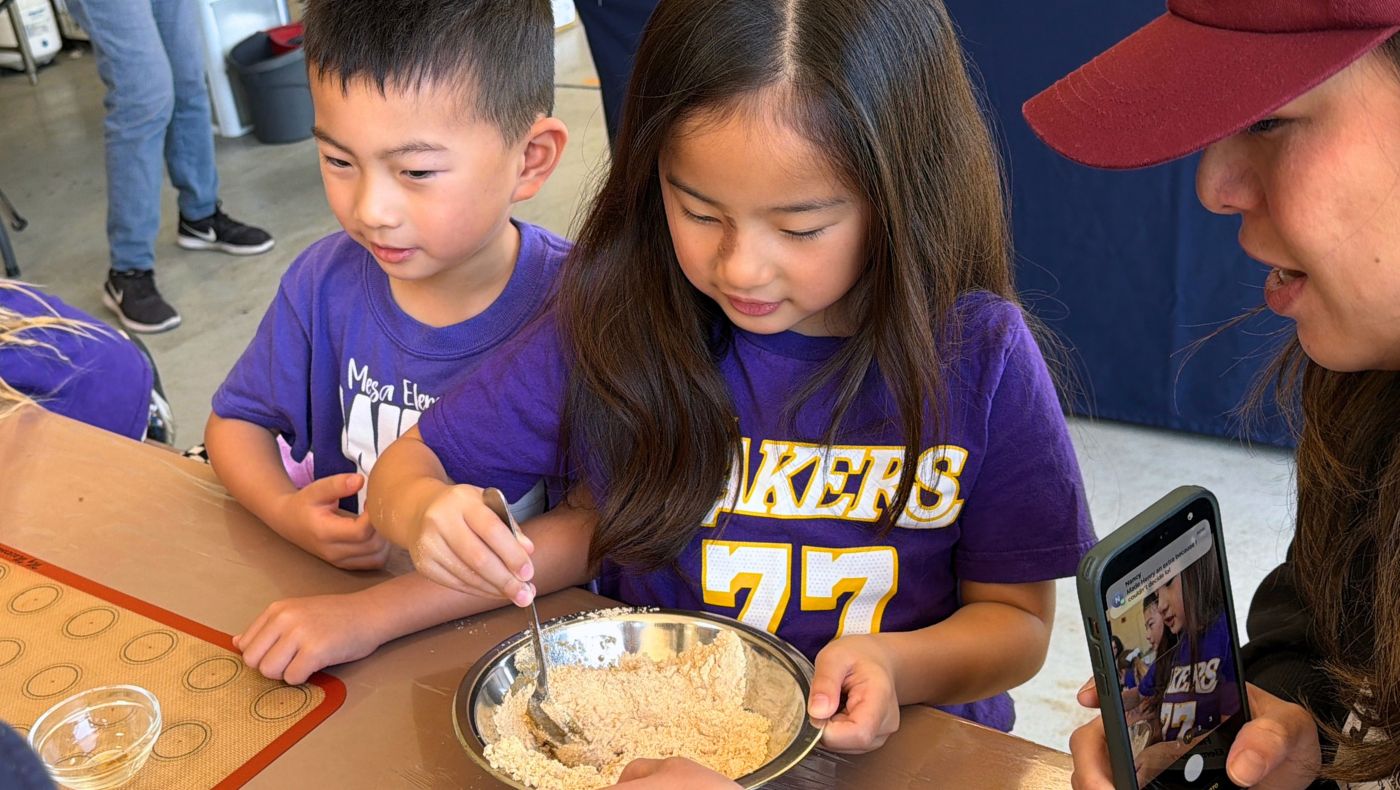
The students made snacks using cereal flour, cooking oil, and warm water. Photo/Yuying Li
Vickey Shao, deputy director of the Education and Humanities Office, emphasized the significance of holding the event around Earth Day.
“We hope that children can step onto this land, learn firsthand where food comes from, and develop an appreciation for resources and the environment,” Shao said. “At the same time, we hope to gradually instill humanistic values and environmental awareness in their hearts.”
Environmental Practices Through Food
The day began with a presentation on vegetarianism and environmental protection. Volunteers introduced the concepts of plant-based eating and respect for life in a simple, age-appropriate way.
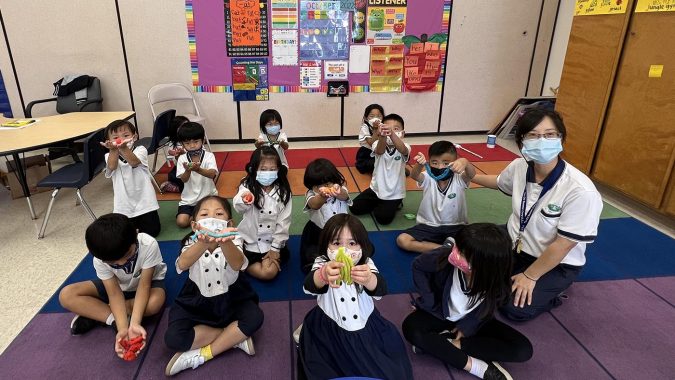
The children then made snacks using cereal flour, cooking oil, and warm water. Without baking or complicated processing, the activity highlighted food in its most natural form.
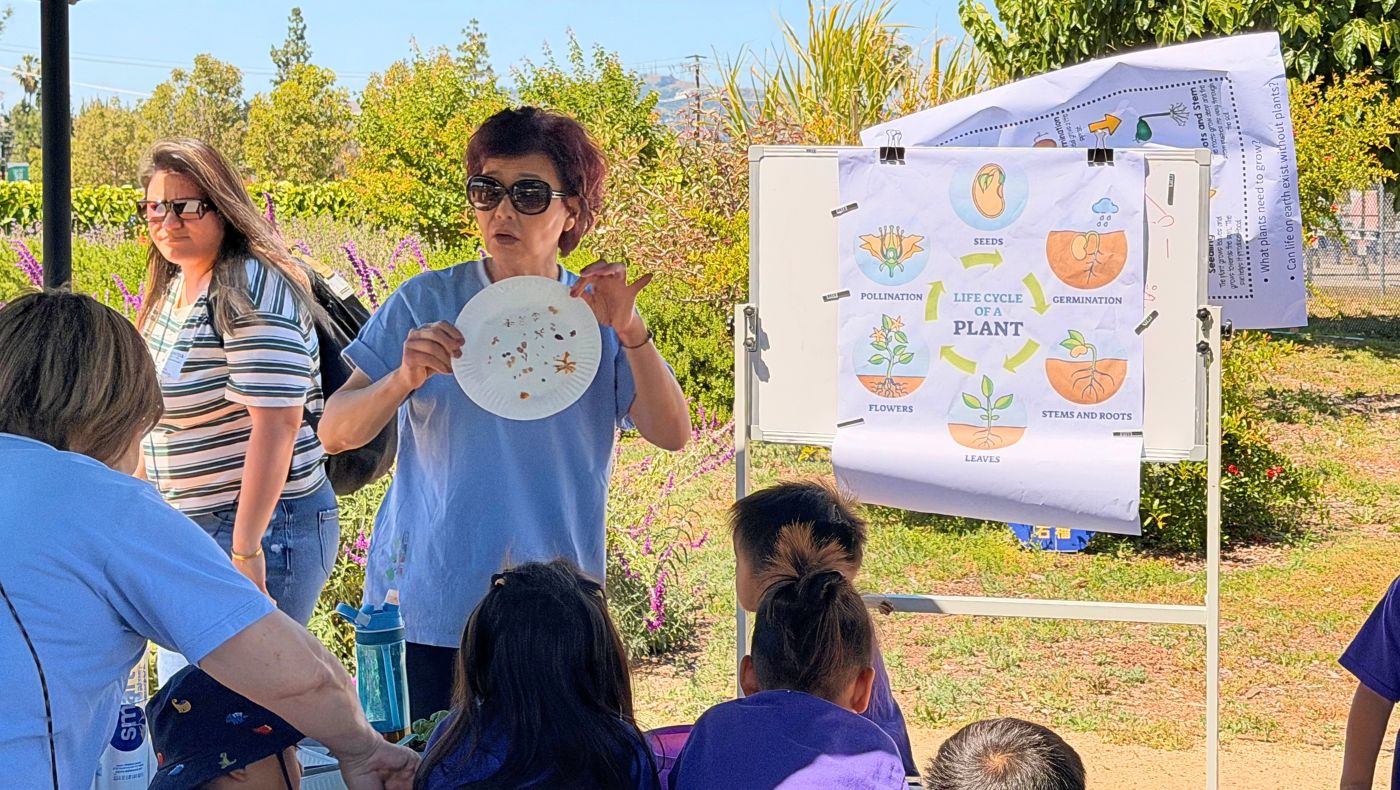
The children visit the Walnut Life Science Farm and learn about plant growth with the guidance of volunteers. Photo/Yuying Li
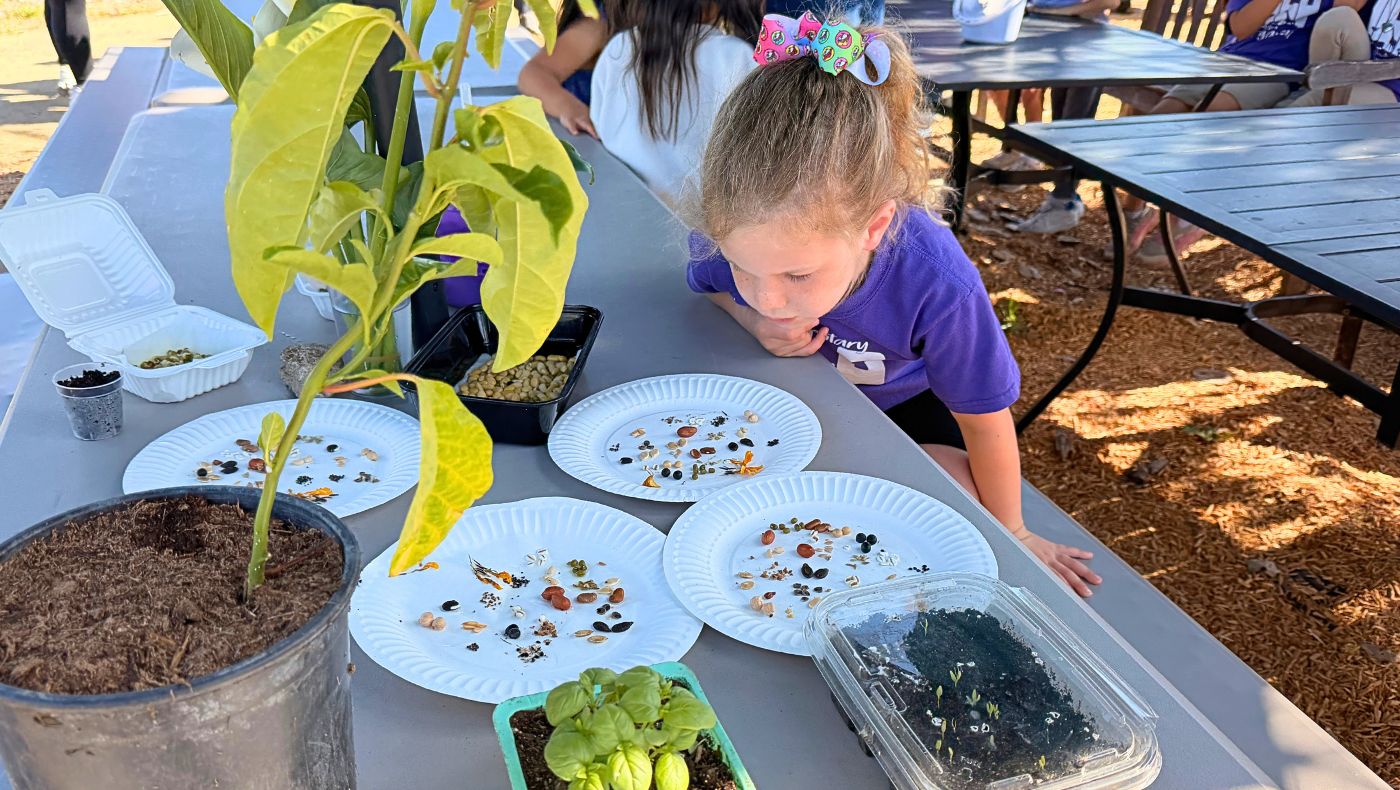
The children carefully observe seeds from various plants, experiencing the diversity and wonder of life. Photo/Yuying Li
By kneading and mixing the ingredients themselves, the children experienced the satisfaction of creating their own food while learning that simple living can be an environmentally friendly practice.
Parent Tracy Varnes shared her children’s excitement about the experience.
“All the kids loved the whole process: mixing the ingredients, shaping the dough, pressing the molds, and finally seeing the finished mooncakes,” Varnes said. “It was such a fun and memorable experience for them.”
Through the simple act of making a snack, the concept of low-carbon living naturally took root in the children’s minds.
Knowledge That Grows From the Soil
Next, the children stepped into the Walnut Life Science Farm, where they learned about nature through direct observation. They explored the growth of fruits and vegetables, discovered how plants change with the seasons, and searched for caterpillars at the butterfly education area, experiencing the diversity and wonder of life firsthand.
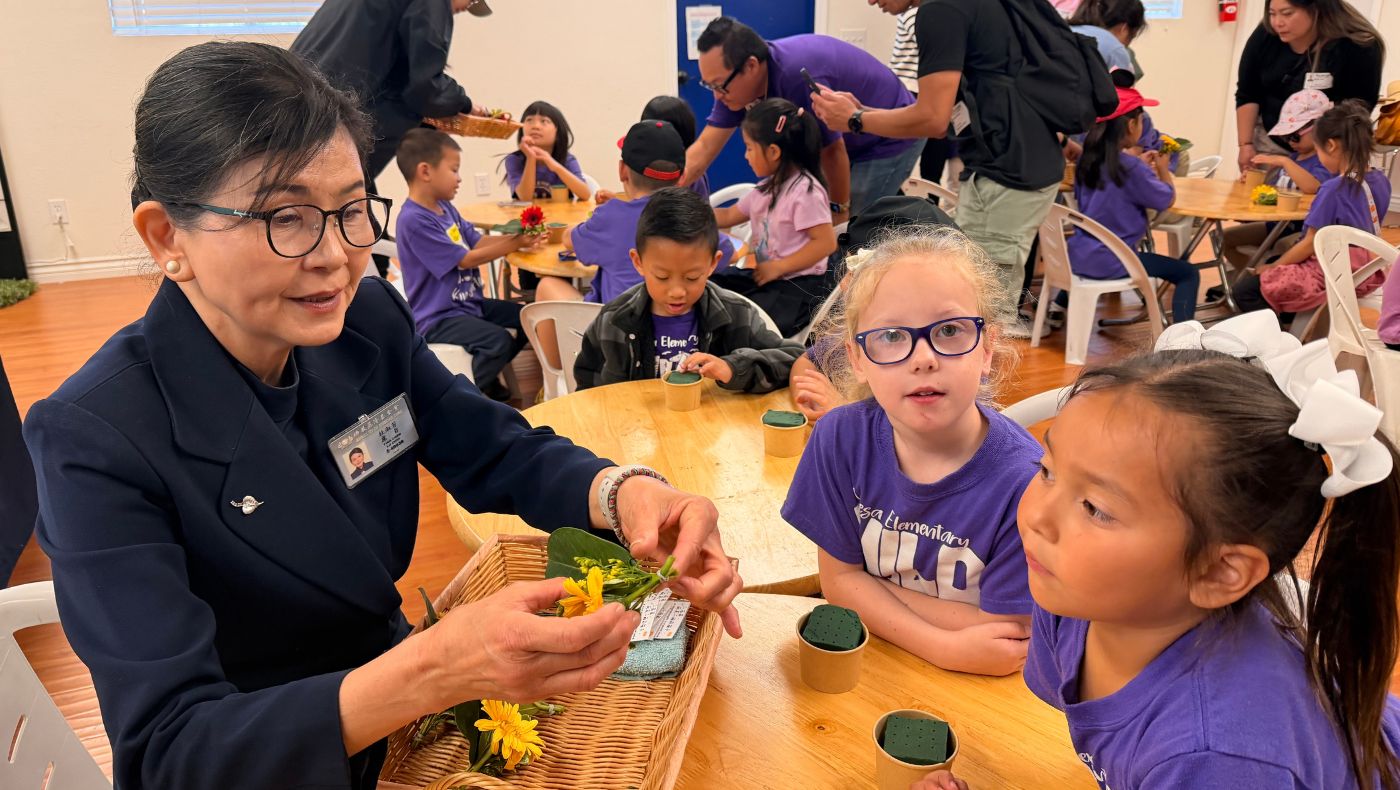
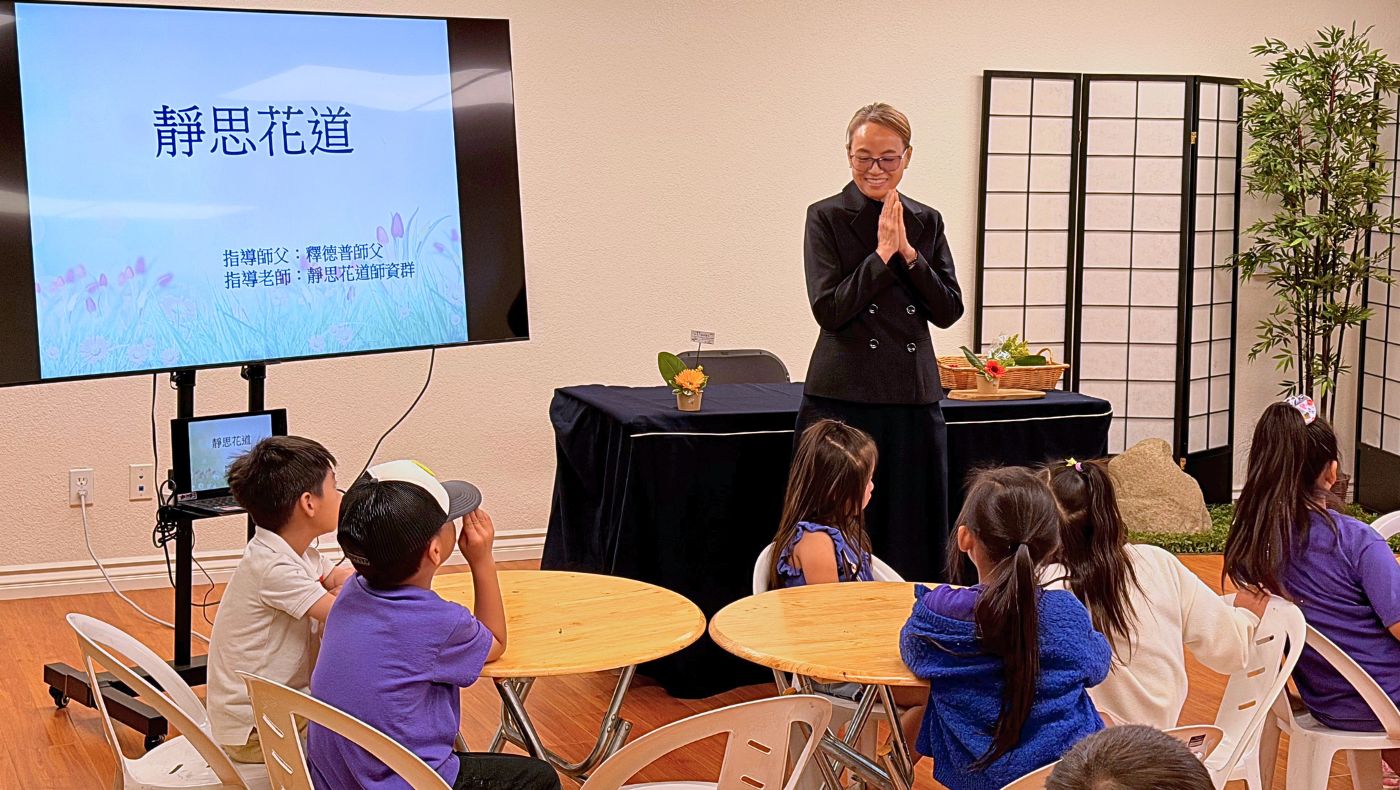
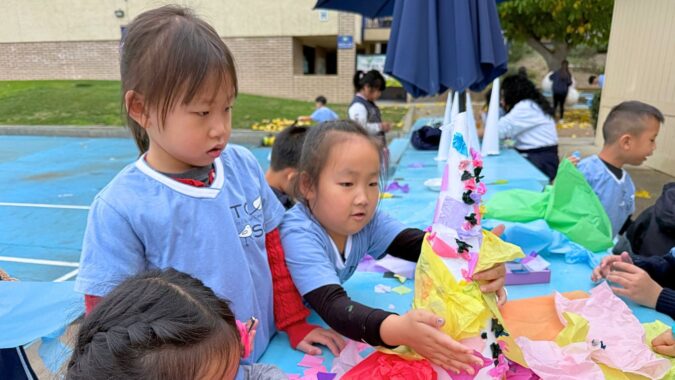
During the flower-arranging workshop, volunteers patiently explained the techniques while the children listened attentively. Photo/Yuying Li
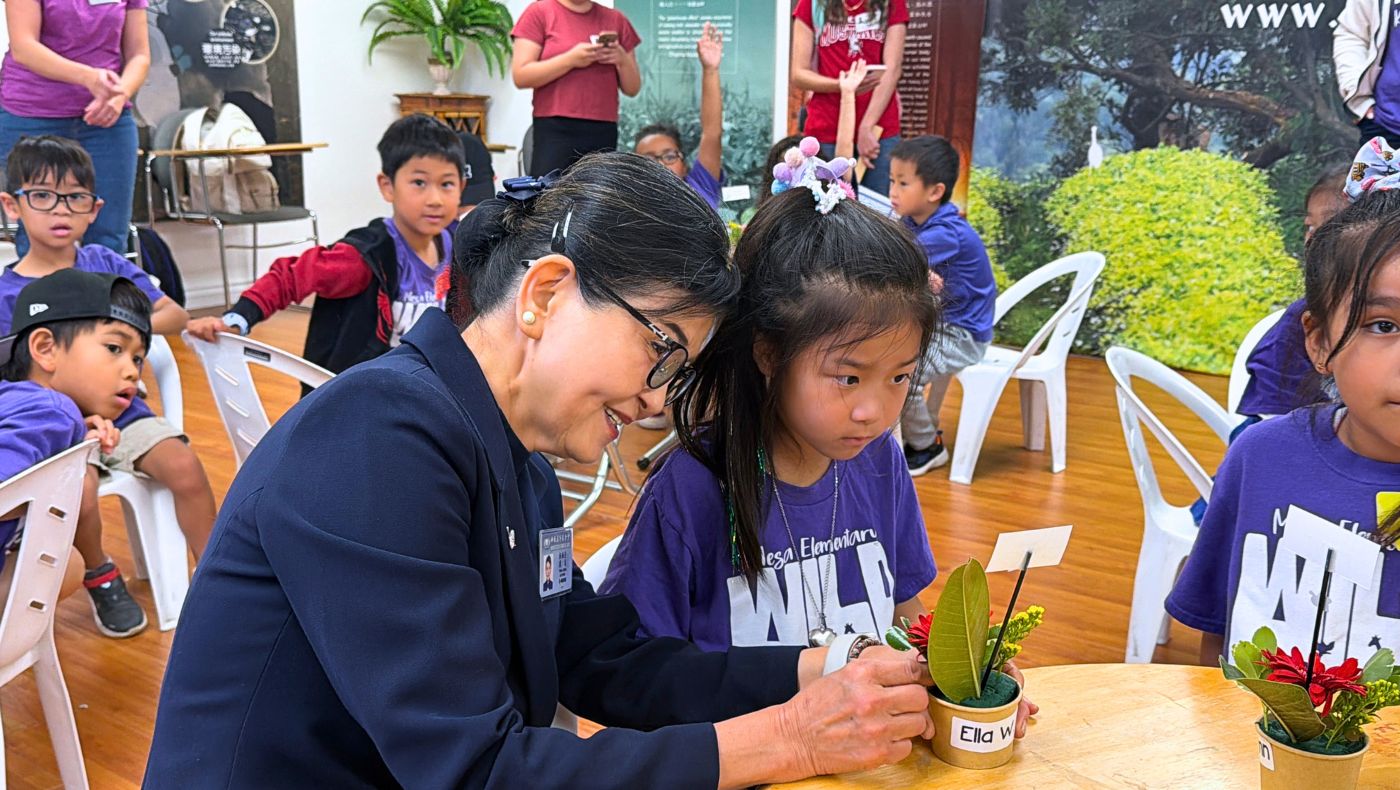
Guided by volunteers, children carefully observed flowers and leaves before gently placing them into their vases. Photo/Yuying Li
Volunteer Charlotte Wang introduced campus plants in both Chinese and English.
“The children have a special connection with strawberries and tomatoes because they know they can only eat them when they turn red,” Wang said. “Everyone was very excited and felt a great sense of accomplishment when they saw the ripe fruit.”
She added that one of the most surprising discoveries for the children was the banana flower.
“Many children were seeing such a large banana flower for the first time, and they found it fascinating,” Wang said. “We also invited them to come back in the future because each season brings different harvests and new things to discover.”
They are not just learning languages, but observing plants in real-world environments and understanding the growth of life. This kind of learning is more comprehensive and meaningful than classroom learning.
When children step onto the soil, their understanding of nature and environmental stewardship truly begins to take root.
Learning with Focus and Gratitude
Surrounded by blooming spring flowers, the children began their flower-arranging experience. Under the guidance of Tina Chen and Yujung Yang, they carefully observed each flower and leaf before thoughtfully arranging them in vases.
Chen explained that the class was designed to offer more than aesthetic education.
“Our theme is spring, which represents the beginning of a good thought,” Chen said. “We hope children will bring the spirit of doing good back into their daily lives by helping their parents, being kind to their peers, and making kindness a daily habit.”
Tzu Ching volunteer Melinda Wu provided real-time interpretation throughout the activity and was impressed by the children’s engagement.
“Although many of them are still learning Chinese, they responded very well and stayed highly focused,” Wu said. “Many children even said they wanted to come back for another flower-arranging class.”
After completing their arrangements, the children proudly shared that they would take their creations home to their families, extending the beauty and kindness they experienced throughout the day.
Bringing Learning Into Daily Life
In addition to nature and art, the event included a mooncake-making experience that allowed children to connect with Chinese culture through hands-on participation.
Teacher Sandy Yang emphasized the value of these cultural experiences, particularly for students in bilingual programs.
“These children, who are growing up in the United States, can gain a more authentic understanding of Chinese culture through hands-on activities and lived experiences,” Yang said. “This is a rare and valuable opportunity.”
Parent Wendy Spencer also reflected on the day’s impact.
“The children could eat berries, grow plants, and make snacks. Every step was a learning experience,” Spencer said. “They learned so much, and we enjoyed the entire process as well.”
Students get to participate in activities they wouldn’t normally be able to do at school, so it’s really nice for them to step outside the classroom and experience something new—something they haven’t had the chance to try before.
Bringing Kindness Home and Extending the Day’s Experience
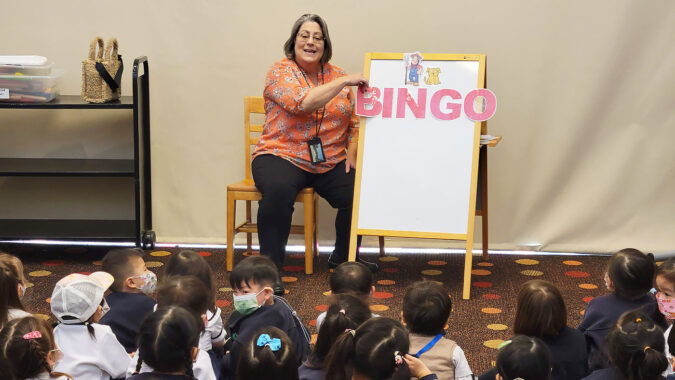
As the event concluded, volunteers shared the Bamboo Bank Story to help children understand the spirit of “accumulating little by little,” a practice advocated by Dharma Master Cheng Yen. Through small daily acts of kindness and goodness, children learned that doing good is not a distant ideal but a way of life that can be practiced every day.
“We hope that children not only come to experience these activities, but also bring these ideas home to influence their families and even more people,” Shao said.
The half-day learning experience ended amid laughter, discovery, and joy. More than an educational outing, the Eco Learning Day planted seeds in the hearts of young participants. Through greetings, food-making, farming, flower arranging, and cultural experiences, the children developed a deeper understanding of the relationship between people and nature, and learned to engage with the world with greater kindness and care.